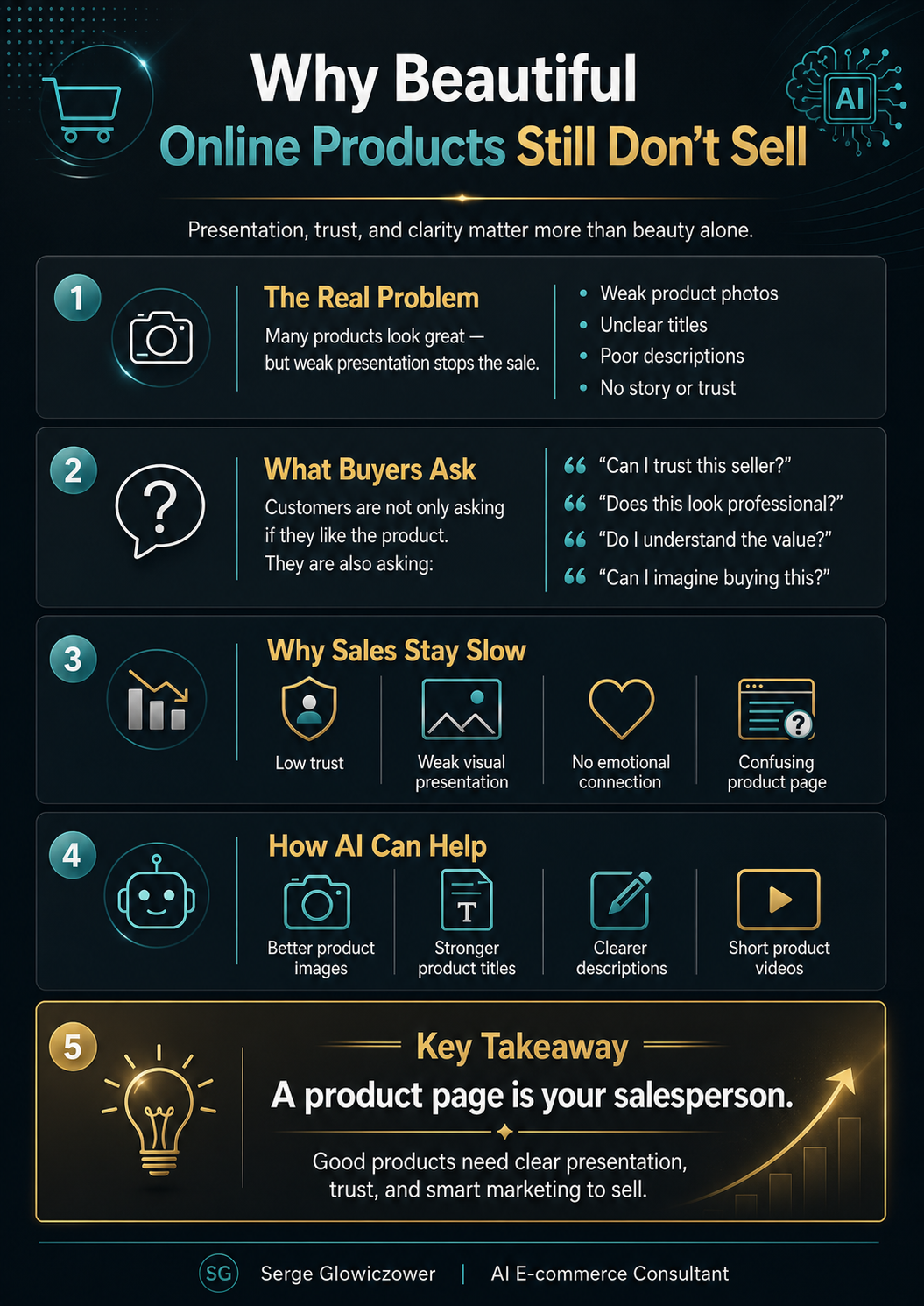
Why Beautiful Online Products Still Don’t Sell
In the world of online business, many entrepreneurs believe that a beautiful product is enough to guarantee success. They spend weeks perfecting the design, choosing attractive colors, creating stunning packaging, and building a modern website. Yet after launch, sales remain disappointing.
The truth is simple: beauty attracts attention, but it does not automatically create trust, demand, or conversions.
A product can look amazing and still fail to sell if the business ignores the real reasons people buy.
1. People Buy Solutions, Not Just Design
Customers rarely purchase something because it “looks nice.”
They buy products that solve a problem, save time, reduce stress, improve status, or create happiness.
For example:
- A beautifully designed fitness app will not sell if users do not believe it can help them lose weight.
- A stylish skincare product will struggle if customers do not trust its results.
- A premium website template may fail if users find it difficult to customize.
Good design supports the solution, but the solution itself must be clear and valuable.
2. Poor Marketing Hides Great Products
Many online products fail simply because nobody understands them.
A product page might contain:
- Weak headlines
- Confusing descriptions
- No emotional connection
- Generic images
- No clear call-to-action
Even an excellent product cannot succeed if the marketing message is unclear.
Strong marketing explains:
- What the product does
- Why it matters
- Who it is for
- How it improves the customer’s life
Without this clarity, visitors leave without buying.
3. Trust Matters More Than Appearance
Online buyers are naturally cautious. They cannot physically touch the product, so they look for signs of trust.
If a website lacks:
- Customer reviews
- Testimonials
- Secure payment methods
- Social proof
- Clear contact information
- Refund policies
then visitors may hesitate to purchase, even if the product looks premium.
A beautiful design may impress users for a few seconds, but trust is what convinces them to spend money.
4. The Wrong Audience Sees the Product
Sometimes the product is good, but it is shown to the wrong people.
For example:
- Luxury products marketed to budget shoppers usually fail.
- Technical tools promoted to beginners create confusion.
- Products for older audiences may not connect with younger users.
Successful businesses understand their target audience deeply:
- Their problems
- Their interests
- Their budget
- Their online behavior
Without audience research, even beautiful products can disappear in the crowded online market.
5. Too Much Focus on Aesthetics, Too Little on User Experience
Some businesses prioritize visuals over usability.
Common mistakes include:
- Slow-loading websites
- Complicated checkout processes
- Difficult navigation
- Too many popups
- Mobile responsiveness issues
A website may look modern but still frustrate users.
Online shoppers value convenience. If buying feels difficult, most visitors leave immediately.
6. Emotional Connection Drives Purchases
People often buy emotionally and justify logically afterward.
Brands that succeed usually create:
- A story
- A lifestyle
- A feeling of belonging
- Emotional excitement
Beautiful products without emotional branding can feel empty or forgettable.
Customers remember how a brand makes them feel more than how its website looked.
7. Competition Is Stronger Than Ever
Today, consumers see thousands of online products every day through:
- Social media
- Ads
- Influencers
- Marketplaces
Being “beautiful” is no longer unique. Modern tools make it easy for almost anyone to create attractive products and websites.
To stand out, businesses need:
- Unique positioning
- Better customer experience
- Strong branding
- Clear value
- Consistent marketing
Conclusion
A beautiful online product is an advantage — but it is not enough.
Sales happen when businesses combine:
- Great design
- Clear value
- Strong marketing
- Trust
- User experience
- Emotional connection
- Audience understanding
In the digital world, beauty may attract visitors, but strategy is what turns visitors into customers.
The most successful online products are not only visually appealing — they solve real problems and communicate their value clearly.